Meta description: How one hero film becomes 30+ platform-native assets. The AI adaptation workflow for multichannel advertising across TVC, Reels, CTV, and OOH.
Key Takeaways
- Multichannel advertising means running one campaign across several channels at once: TV, CTV, social, search, OOH. The hard part isn't the media plan. It's adapting the creative so each version feels native instead of cropped.
- Adaptation beats new production. One well-designed hero film can become 30+ AI-generated assets. AI compresses that versioning workflow from weeks of manual editing to days.
- Design the cutdown tree before you produce the hero. AI makes variants near-free only if consistency is engineered upfront. Retrofitting a finished 16:9 film into vertical is where campaigns die.
- CTV is not TV. Connected TV gets premium 16:9 pacing. Reels get a 3-second vertical hook. OOH gets one readable idea. Same story, three different openings.
The One-Idea Economy Behind AI Multichannel Adaptation
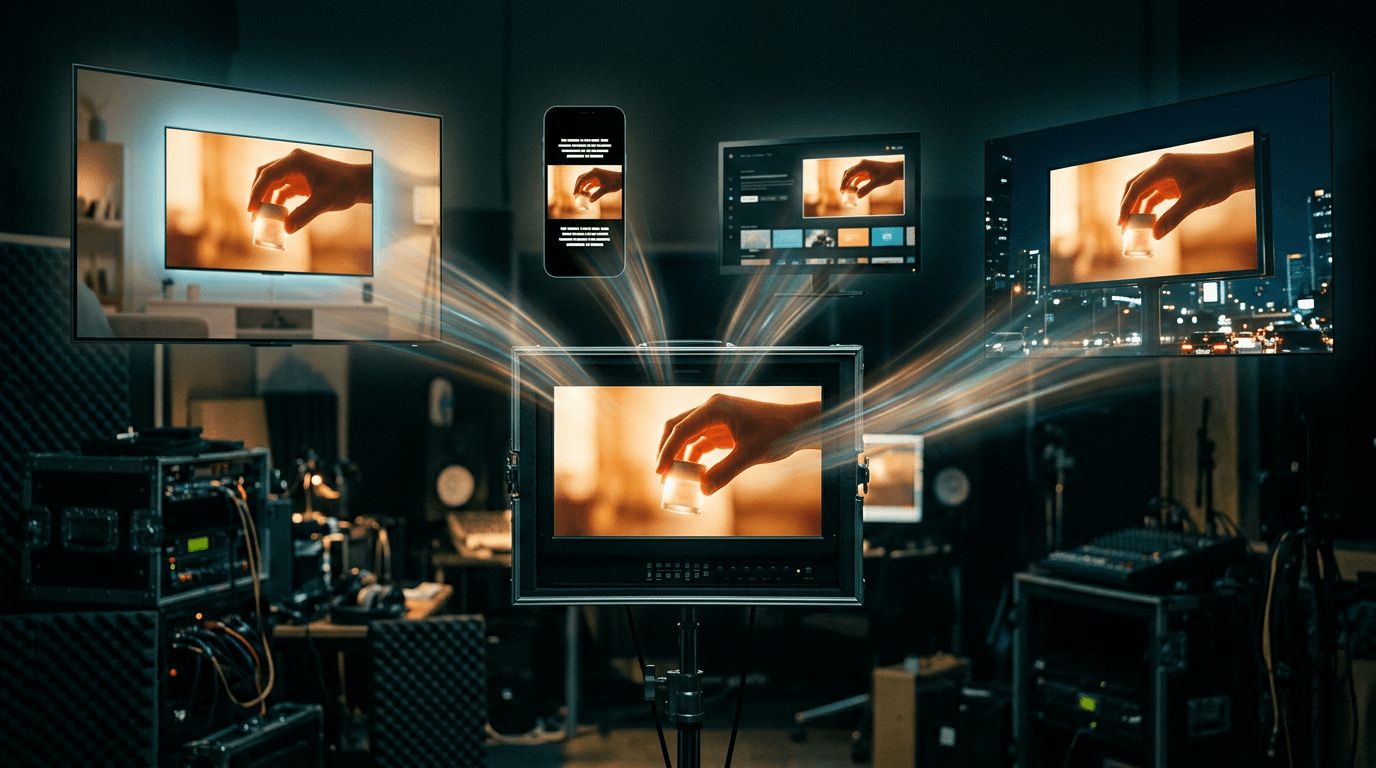
Multichannel advertising is running a coordinated campaign across multiple channels simultaneously. The efficient way to do it isn't producing new creative per channel. It's producing one strong hero concept, then using AI to adapt it into platform-native versions for TV, CTV, Reels, and OOH at a fraction of the cost of separate shoots.
Quick definition sort-out, because a People Also Ask box will demand it. Multichannel means you're present on every channel that matters to your target audience. Cross-channel (and omnichannel) means those channels talk to each other, sharing data and sequencing messages. This guide covers the creative half of both: how one idea travels.
Here's my position after directing AI campaigns from the studio side: most multichannel campaigns fail in the edit suite, not the media plan. The media buying gets weeks of attention. The creative adaptation gets a junior editor and a deadline. So the Reels cut is a center-crop of the TV ad with the character's face half out of frame, and the CTV cut is the TVC file re-uploaded as-is. Audiences can tell. Platforms can tell too, and their algorithms price it in.
The economics argue for doing this properly. 87% of marketers already use generative AI in recurring workflows (Salesforce State of Marketing 2026). AI production compresses ad film cost and time by 60 to 90%, and the savings compound hardest on versioning, because variants reuse the world you already built. One idea, adapted well, outperforms five mediocre channel-specific ideas, and costs less than two of them. That's the shift every advertiser feels in 2026: content creation stopped being the bottleneck, so judgment became the whole job.
For the full economics picture, start with our AI advertising playbook. For what the hero film itself costs, see the AI commercial cost guide.
The Cutdown Tree: Planning 30+ AI Assets from One Master
A cutdown tree is a versioning map drawn before production: the hero film at the root, then branches for durations (60s, 30s, 15s, 6s), aspect ratios (16:9, 9:16, 1:1, 4:5), platforms, languages, and offers. Planning it upfront lets AI generate variants systematically instead of forcing edits later.
The tree looks like this in practice:
- Root: one hero film, 60 to 90 seconds, the full story
- Duration branch: 30s TVC/CTV cut, 15s pre-roll, 6s bumper
- Aspect branch: each duration in 16:9, 9:16, 1:1
- Hook branch: 3 to 5 alternate openings per vertical cut for creative testing
- Language branch: each hero and 30s cut dubbed and lip-synced per region
- Offer branch: end-frames swapped per market, season, or promotion
Multiply that out and 30 to 50 assets from one shoot is normal, not ambitious. The catch: every branch has to be planned while the hero is being designed. Generate key moments with vertical safe zones in mind. Keep the product hero-framed in center-cut-safe positions. Write the script so a 6-second thought exists inside the 60-second story.
When we build an AI hero film through the commercial production arm of our film studio (the same craft bench that makes our narrative films, international microdramas, and stylised animation), the deliverables matrix is part of the brief, not a post-production surprise. That's the single biggest workflow change I'd push on any marketer's team.

Aspect and Duration Strategy for Every Channel
Each channel needs its own format logic: TVC and CTV run 16:9 with premium pacing, Reels and Shorts run 9:16 with a fast hook and burned-in subtitles, OOH runs variable aspect ratios with one high-contrast idea. AI handles the reframing, upscaling, and subtitle work that used to eat edit weeks.
The formatting matrix we work from:
| Channel | Target Format | Key AI Adaptation Task | Creative Best Practice |
|---|---|---|---|
| TVC / CTV | 16:9 landscape, 15–60s | Visual upscaling to broadcast/4K, sound leveling | Meticulous pacing, premium sound design |
| Reels / Shorts | 9:16 vertical, 6–30s | Center-subject reframing, dynamic burned-in subtitles | 3-second hook, high-volume hook variants |
| LinkedIn / feed video | 1:1 or 4:5, 15–60s | Reframe plus caption-first re-edit | Value-forward open, silent-watchable |
| OOH / DOOH | Variable aspect, 6–10s loop or static | High-contrast static or looping generation | One readable idea, context-dependent |
Two notes the table can't hold. First, vertical is not a crop. A real 9:16 cut re-stages the subject, tightens the framing, and often re-generates backgrounds so the composition works. AI-powered reframing does the heavy lifting, but a human editor still decides what the frame means. Second, sound: CTV plays loud in living rooms; Reels and LinkedIn mostly play muted. The same cut needs full sound design in one world and subtitle-first storytelling in the other.
DOOH deserves its own sentence, because it's quietly the most AI-native channel. Digital out-of-home screens can swap creative programmatically by time of day, weather, or location, which means your adaptation tree needs day/night and context variants, not just sizes.
Platform-Native Hooks: Re-Opening the Same Story for Reels vs CTV
A CTV viewer is leaned back, sound on, watching by choice. A Reels viewer is leaned in, sound off, mid-scroll. The same story needs different first three seconds: CTV earns attention with cinematic build, Reels must seize it with an immediate visual question.
This is why re-uploading the TVC to Reels fails. Not because the ad is bad, but because its opening assumes attention it hasn't earned yet. Our fix is the hook branch of the tree: keep the story spine, re-generate the opening. With AI video production that's cheap. Three to five alternate cold opens per vertical cut, tested against each other, winner scaled. It's the same testing-velocity logic that makes generative AI advertising use cases compound: volume where it matters, craft everywhere.
Creator-style openings deserve a mention here too. For performance ad placements, a UGC-flavored hook (handheld feel, direct address) often out-pulls the cinematic open, and AI UGC video makes those variants without a creator shoot. Same for presenter-led cuts: an AI avatar version of the message works for explainer placements the hero film was never designed for.
How AI Is Transforming CTV Advertising in 2026
AI is transforming CTV advertising on both sides of the campaign: generative AI produces broadcast-grade CTV ad creative and variants at low cost, while machine learning drives programmatic media buying, contextual targeting, and real-time optimization of ad placements across CTV platforms.
CTV earns its own section because it's where TV advertising's premium canvas meets digital's targeting capabilities, and because it's the channel most multichannel plans now anchor on. Audiences moved: connected TV and ad-supported streaming keep absorbing time that once belonged to linear TV, with subscription video on demand services rolling out ad tiers, global video budgets following the audience, and digital video viewing time still climbing. Pull the current quarter's numbers from an audience tracker before you build a plan on them; the direction has been stable for years, the exact percentages have not.
What does that mean for an advertiser adapting one idea across every channel?
- Creative side: generative AI makes CTV advertising campaigns viable for brands that could never afford traditional TV advertising. An AI-generated hero film at the Indian entry rate of ₹2 to 5 lakh can hold its own on a living-room screen if the craft is there. That's new. Five years ago the entry ticket to the CTV space was a full production budget. AI-generated content also means a brand's regional cuts ship with the master instead of months later.
- Media side: programmatic advertising pipes now run the buying, and AI helps advertisers move beyond broad demographics into contextual targeting. AI in CTV advertising now shapes audience targeting itself, matching relevant ads to the content being watched rather than tracking the viewer. AI can analyze what's on screen and infer a specific audience from it, so as privacy rules tighten and every platform's privacy policy narrows what's trackable, contextual becomes the default. Knowing the show is a cooking drama tells you which variant to serve.
- Optimization side: machine learning reads campaign performance across audience segments and lets advertisers adjust campaigns in flight, shifting CTV ad spend toward winning variant-placement pairs and adjusting ads in real time. Autonomous AI agents are starting to handle this loop end to end, from analytics to budget shifts, with the marketer approving rather than operating. AI goes beyond reporting here, closing the loop without a human at every step.
So AI's role in CTV advertising splits cleanly in two. AI for CTV on the media side is targeting and pacing across CTV campaigns. AI and CTV on the creative side is the reason a mid-market brand can be on the channel at all. The second one is the bigger unlock, and it's the one production teams control.
The honest caveat from a production chair: none of that precise targeting rescues a weak ad. AI can help find the right audience; it can't make them care. Which is why the rest of this guide is about the creative tree, not the media stack.
AI Versioning Workflow: Languages, Offers, Regions
AI versioning swaps the expensive parts of localization: dubbing via voice synthesis, lip-sync via temporal-tracked facial models, end-frames and offers via re-generation. A campaign can ship in six languages and four regional variants from one master, in days.
Language is where the savings get silly. Traditional localization means re-record, re-edit, sometimes re-shoot. Our pipeline runs synthesis-based dubbing plus a multi-tool lip-sync pass with facial consistency, so the actor's lips match the new language. Full disclosure: we're an AI studio, so we're biased. But this specific capability, pan-India language versions of one film, is where the cost gap between AI and traditional versioning is widest, and it's the branch of the tree most Indian campaigns need. For the full method, see our AI dubbing and localization guide.
Offers and regions ride the same rails. Festive end-frame for one market, price point for another, AI product video cutdowns for retail placements. The master stays locked; the variants orbit it.
Building One Brand World Across Every Cut
Consistency across 40 assets doesn't happen by review. It happens by system: locked character models, style and lighting references, graded color pipelines, and a shot library every variant draws from. That's what keeps asset 39 looking like asset 1.
This is the part most adaptation content skips, and it's where AI-generated campaigns visibly fall apart. Generate each variant from scratch and you'll get drift: faces subtly change, lighting shifts, the world stops being one world. When we made Unmasked, our awarded short, the pipeline combined multiple video models with two image models trained specifically for character consistency, and we generated over an hour of footage to keep eight minutes coherent. Wasteful? Extremely. Also the point. Campaign versioning uses the same discipline: consistency is engineered, then variants become cheap.
Actually, let me sharpen that. Consistency isn't a quality bar you clear at the end. It's the asset. The brand world you lock for the hero film is what makes 40 variants feel like one campaign instead of 40 different AI ads.
From One Hero Film to a Full-Funnel Asset Tree
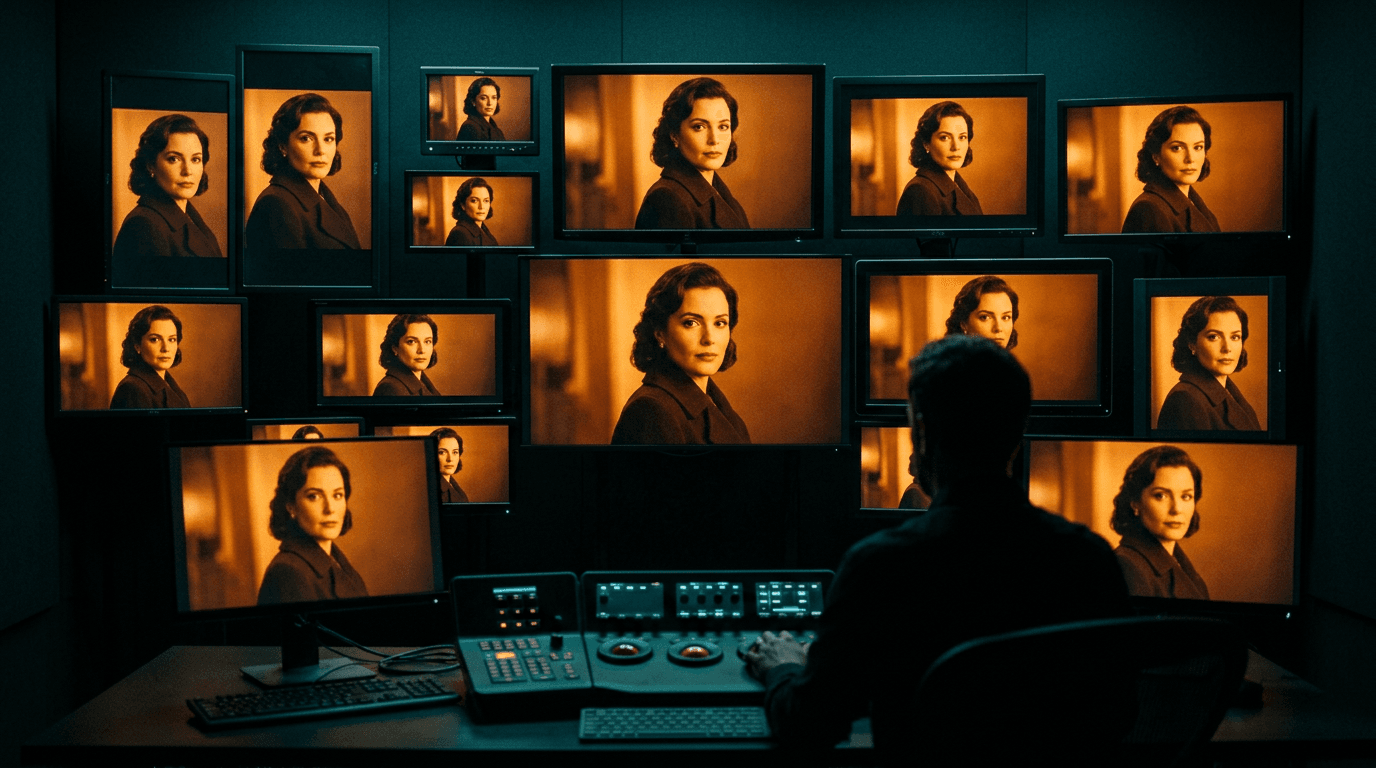
A typical full-funnel tree from one 60-second hero: 3 duration cuts × 3 aspect ratios = 9 core assets, plus 4 hook variants, 3 language versions of the hero and 30s cuts, 2 offer end-frames, and 2 DOOH loops. Roughly 40 assets, delivered in days rather than months.
Here's how we'd structure it for a D2C launch (numbers are the planning template, not a client claim):
| Funnel stage | Assets from the tree | Channel |
|---|---|---|
| Awareness | Hero 60s, 30s CTV cut, DOOH loops | CTV, YouTube, OOH |
| Consideration | 15s cuts, 3 vertical hook variants | Reels, Shorts, pre-roll, LinkedIn |
| Conversion | 6s bumpers, offer end-frames, UGC-style cuts | Performance placements |
| Regional | Language-dubbed hero + 30s per market | Regional TV/CTV, social |
The benchmark for what one idea can do on a deadline is still Kalshi's NBA Finals spot: made essentially solo in about two days for under $2,000 against seven-figure traditional quotes (NPR, 2025). Now imagine that idea versioned down a tree instead of shipped once. Different AI tools handle different branches (reframing, dubbing, upscaling), but the tree is one design. A custom multi-model stack, not a single prompt box.
Get a Versioning Matrix for Your Next Campaign
If you're planning a launch, the highest-leverage hour you can spend is mapping the cutdown tree before anything is produced. We build that matrix as part of every commission: channels, formats, hooks, languages, offers, all designed around one hero idea. See what one brand world looks like across formats in our portfolio, or book a 30-minute call and bring your media plan. We'll bring the tree.
FAQ
Why shouldn't a brand run the exact same video file across Reels and CTV? Because the viewer state is opposite. CTV is lean-back, sound-on, big screen. Reels is lean-in, sound-off, mid-scroll. Aspect ratios, safe zones, pacing, and sound strategy all differ. A native cut per channel respects those physics. A re-upload ignores them and underperforms.
What role does AI play in DOOH campaigns? Digital out-of-home screens are programmatic, so AI adapts creative to context: swapping day and night versions, weather-reactive variants, or location-specific end-frames. Generative tools also produce the high-contrast static and looping formats DOOH needs from the same hero campaign world.
How does AI optimize cross-channel budget distribution in real time? Optimization algorithms read performance signals per asset and placement, then shift ad spend toward the winning variant-channel combinations, with attribution models crediting each touchpoint. With a deep asset tree, the system has real options to choose from, which is why creative volume and media optimization compound each other.
How does AI change what content works on CTV? Two ways. Generative tools now produce the content for ads directly, which is what's making CTV advertising affordable for brands that never had a TV budget. And AI-driven measurement reads which content on CTV an audience actually finishes, so you know which variant to weight. When it comes to CTV, the best AI decision most teams can make is to use AI for volume and versioning, and keep human judgment on the idea itself.
What is creative automation in multichannel marketing? Creative automation is using artificial intelligence and templated systems to generate ad variants (formats, durations, languages, offers) from one master creative, compressing weeks of manual adaptation into hours while keeping brand consistency locked. It's the marketing tool category behind most large-scale versioning today.
Written by MSN Karthik, Founder & Director at Adwhyta. IIT Guwahati alumnus, co-founder of Zipy.ai, TEDx speaker, and award-winning AI filmmaker whose short "Unmasked" won 7 international AI film awards.